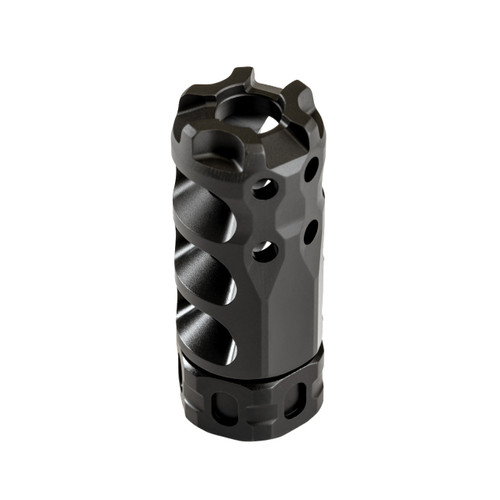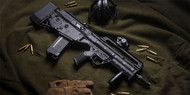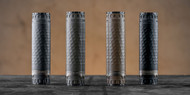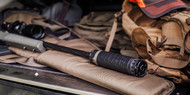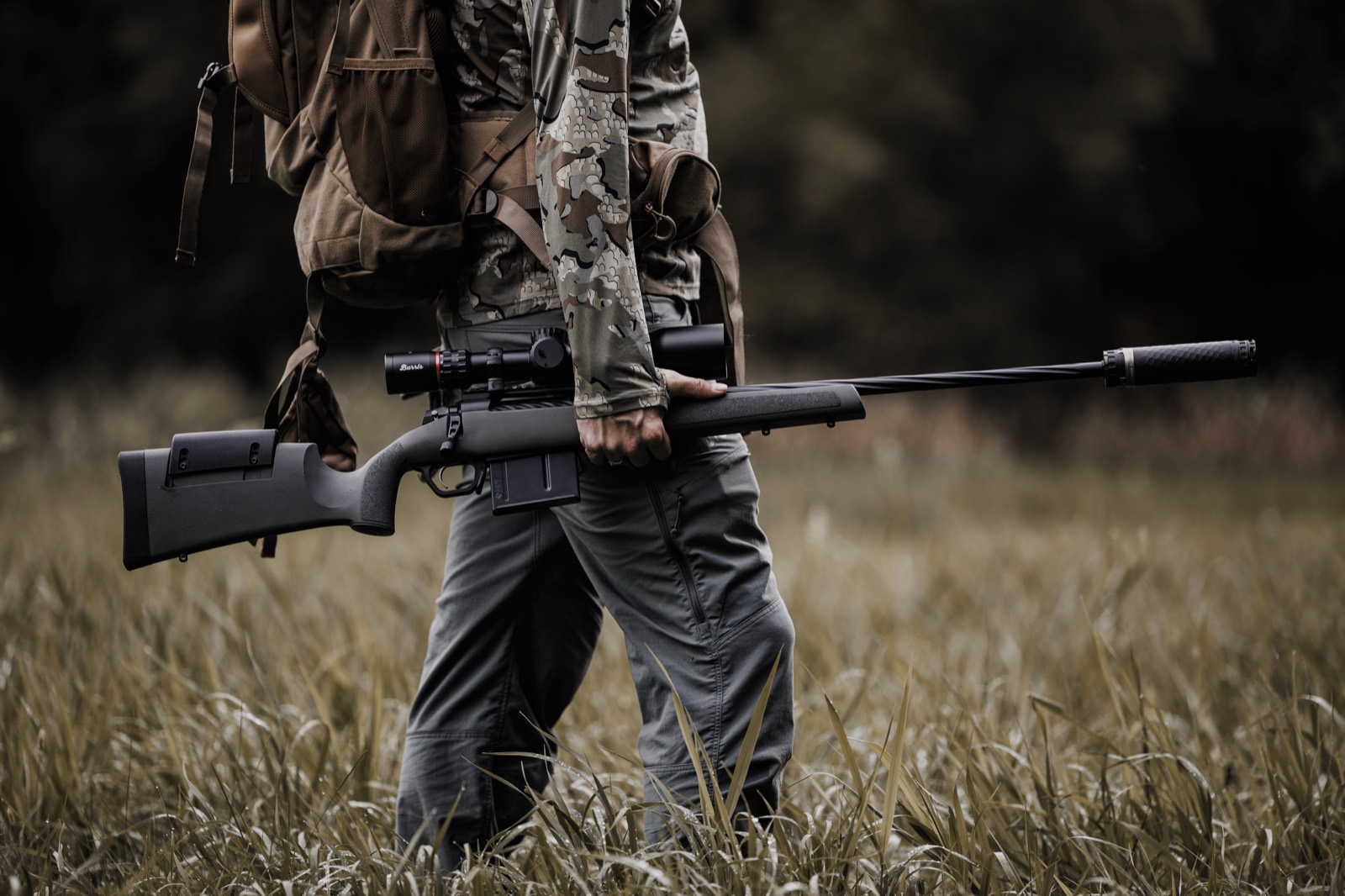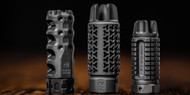
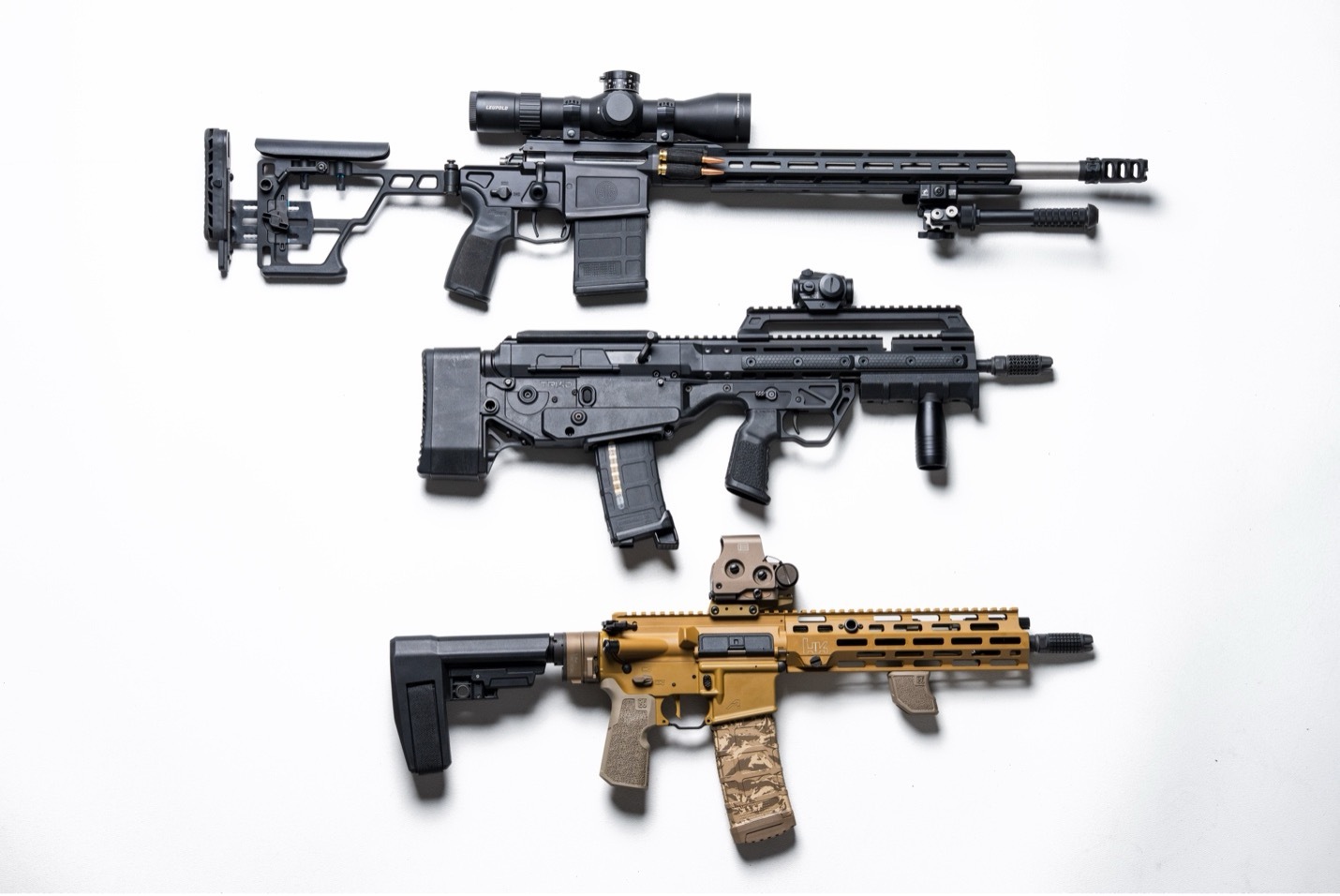
Whether you're building a precision rifle, a hunting rifle, or a hard-use carbine, the muzzle device is one of the most important and often overlooked components affecting performance. While many shooters focus on optics, barrels or triggers, the muzzle device is what plays the most critical role in recoil, muzzle movement, flash signature, blast, suppressor compatibility, and overall shooting performance.
A great muzzle device isn’t defined by appearance, price, or marketing claims – it’s defined by how effectively it solves the engineering problem it was design to address. Unfortunately, the industry’s marketing is crowded with products that rely more on aggressive styling and marketing claims than sound engineering. So, what actually separates a great muzzle device from the rest?
PURPOSE-DRIVEN DESIGN
Every muzzle device is a compromise. Improving one characteristic often comes at the expense of another. The best designs aren't those that maximize every performance metric, but those that optimize the characteristics that matter most for the intended application.
The first question every shooter should ask is simple: What problem is this muzzle device solving?
Different muzzle devices are engineered to accomplish different objectives.
- Muzzle brakes reduce rearward recoil by redirecting expanding gases.
- Flash hiders minimize visible muzzle flash, preserving night vision and reducing shooter signature.
- Compensators reduce muzzle climb for faster follow-up shots.
- Suppressor mounts must maintain precise alignment while surviving repeated installation cycles and extreme temperatures.
No single design can maximize every characteristic simultaneously. It’s imperative to understand these tradeoffs and engineer products around specific performance priorities rather than attempting to be everything to every pursuit.
ENGINEERING OVER COSMETICS
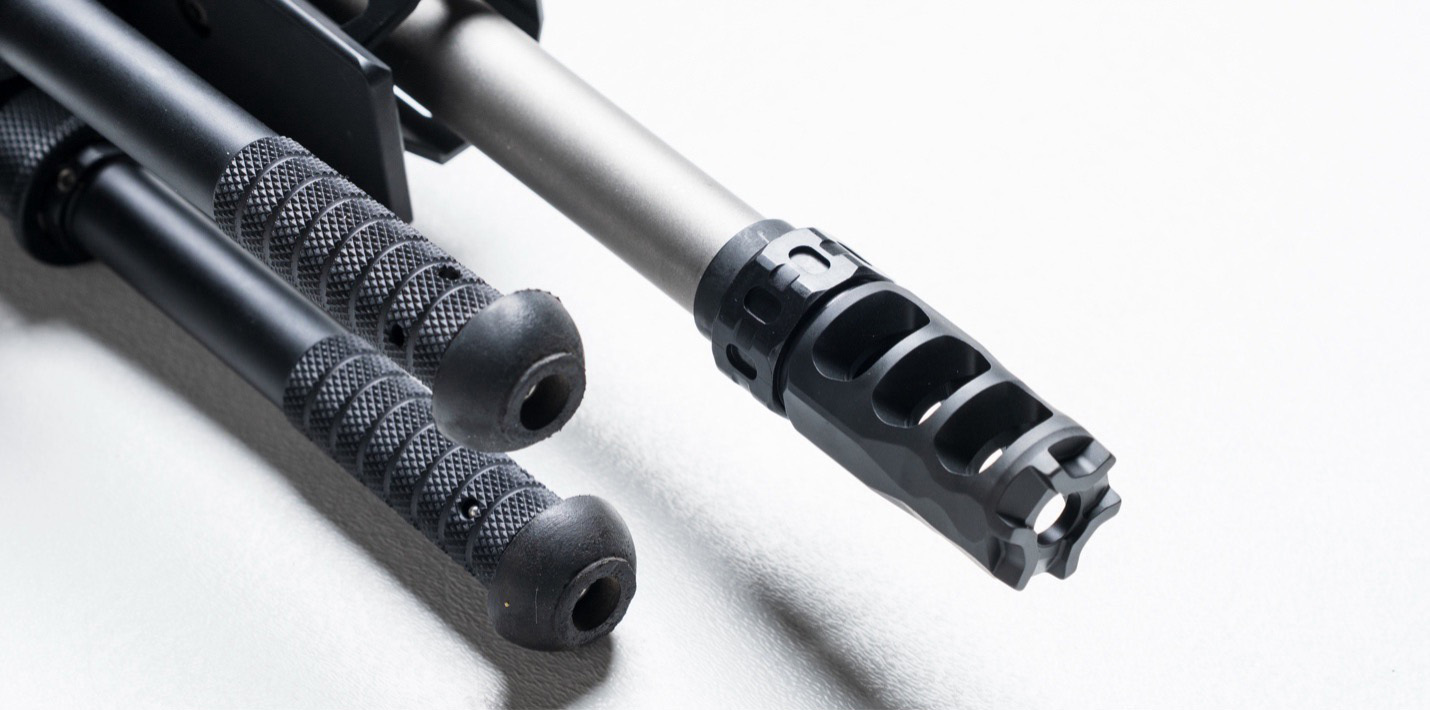
A great muzzle device isn't defined by how aggressive it looks. Instead, performance comes from careful engineering of gas dynamics.
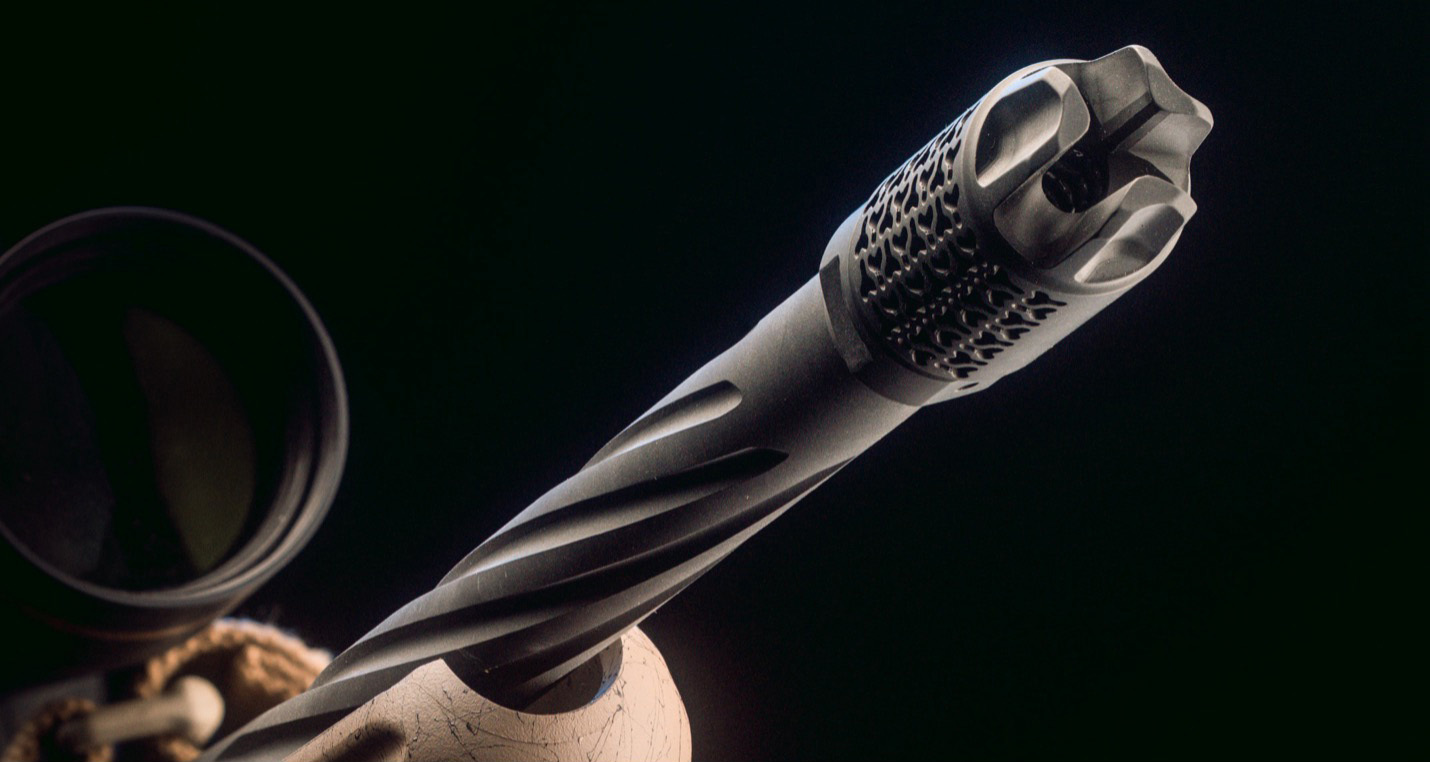
Every internal geometry, port orientation, expansion surfaces, gas timing, and overall flow path determines how effectively propellant gases are redirected. Even small changes in geometry can produce measurable differences in recoil reduction, concussion, flash suppression, and accuracy.
The best designs are developed through computational fluid dynamics (CFD), finite element analysis (FEA), extensive live-fire testing, and continual refinement—not simply copying existing products or adding additional ports. Good engineering produces consistent performance. Great engineering produces performance with fewer compromises.
BALANCING PERFORMANCE
One of the biggest mistakes shooters make is focusing on a single performance metric. For example, a muzzle brake can achieve outstanding recoil reduction simply by redirecting enormous amounts of gas sideways. While effective at reducing recoil, that same design may produce excessive blast, concussion, and noise for nearby shooters. Likewise, a flash hider that virtually eliminates flash may provide little recoil reduction.
The best muzzle devices balance competing objectives rather than maximizing only one. Depending on the application, that balance may include:
- Recoil reduction
- Muzzle control
- Flash suppression
- Reduced shooter disturbance
- Suppressor compatibility
- Overall handling characteristics
Visible muzzle flash isn't simply a cosmetic issue. Excessive flash can reduce night vision, reveal shooter position, and distract during rapid follow-up shots. Flash suppression depends heavily on gas management. Well-engineered flash hiders promote dispersion of hot gases, controlling how they expand, cool, and mix with atmospheric oxygen.
Modern engineering has also produced hybrid devices capable of reducing flash while maintaining acceptable recoil characteristics — a balance that requires careful design rather than simply combining features.
PURPOSE-DRIVEN DESIGN
Every muzzle device is a compromise. Improving one characteristic often comes at the expense of another. The best designs aren't those that maximize every performance metric, but those that optimize the characteristics that matter most for the intended application.
The first question every shooter should ask is simple: What problem is this muzzle device solving?
Different muzzle devices are engineered to accomplish different objectives.
- Muzzle brakes reduce rearward recoil by redirecting expanding gases.
- Flash hiders minimize visible muzzle flash, preserving night vision and reducing shooter signature.
- Compensators reduce muzzle climb for faster follow-up shots.
- Suppressor mounts must maintain precise alignment while surviving repeated installation cycles and extreme temperatures.
No single design can maximize every characteristic simultaneously. It’s imperative to understand these tradeoffs and engineer products around specific performance priorities rather than attempting to be everything to every pursuit.
ENGINEERING OVER COSMETICS
A great muzzle device isn't defined by how aggressive it looks. Instead, performance comes from careful engineering of gas dynamics.
Every internal geometry, port orientation, expansion surfaces, gas timing, and overall flow path determines how effectively propellant gases are redirected. Even small changes in geometry can produce measurable differences in recoil reduction, concussion, flash suppression, and accuracy.
The best designs are developed through computational fluid dynamics (CFD), finite element analysis (FEA), extensive live-fire testing, and continual refinement—not simply copying existing products or adding additional ports. Good engineering produces consistent performance. Great engineering produces performance with fewer compromises.
BALANCING PERFORMANCE
One of the biggest mistakes shooters make is focusing on a single performance metric. For example, a muzzle brake can achieve outstanding recoil reduction simply by redirecting enormous amounts of gas sideways. While effective at reducing recoil, that same design may produce excessive blast, concussion, and noise for nearby shooters. Likewise, a flash hider that virtually eliminates flash may provide little recoil reduction.
The best muzzle devices balance competing objectives rather than maximizing only one. Depending on the application, that balance may include:
- Recoil reduction
- Muzzle control
- Flash suppression
- Reduced shooter disturbance
- Suppressor compatibility
- Overall handling characteristics
Visible muzzle flash isn't simply a cosmetic issue. Excessive flash can reduce night vision, reveal shooter position, and distract during rapid follow-up shots. Flash suppression depends heavily on gas management. Well-engineered flash hiders promote dispersion of hot gases, controlling how they expand, cool, and mix with atmospheric oxygen.
Modern engineering has also produced hybrid devices capable of reducing flash while maintaining acceptable recoil characteristics — a balance that requires careful design rather than simply combining features.
DATA OVER MARKETING
Perhaps the most overlooked characteristic of a great muzzle device isn't the product itself, it's the evidence supporting it. Instrumented recoil testing, flash photography comparisons, accuracy testing, material specifications, transparent performance data, and engineering explanations can all be crucial when purchasing a high-performing device. Objective performance data separates engineering from advertising. Consider the following:
- Recoil Measurements
- Flash Photography
- Accuracy Testing
- Endurance Testing
- Material Specifications
CHOOSING THE RIGHT MUZZLE DEVICE
The best muzzle device isn't necessarily the one with the higher price tag, most ports, or the most aggressive appearance. It's the one engineered to perform reliably for your specific application. Whether your priority is precision shooting, hunting, competition, or suppressed use, focus on products built around measurable engineering principles.
A great muzzle device should combine purpose-driven engineering, precision manufacturing, durable materials, proven gas management, reliable suppressor compatibility, and objective performance testing.
Muzzle devices are more than an accessory — they’re a critical interface between your rifle and the forces generated with every shot. Small improvements in recoil control, flash suppression, suppressor mounting, and durability can translate into meaningful gains in accuracy, confidence, and long-term reliability.
When evaluating your next muzzle device, examine the engineering, the manufacturing quality, and the data behind the design. Products built on sound engineering principles consistently outperform those built around aesthetics or trends. The best muzzle devices aren't designed to look impressive; they're engineered to perform to the highest of standards.
Recommended Products:
-
-

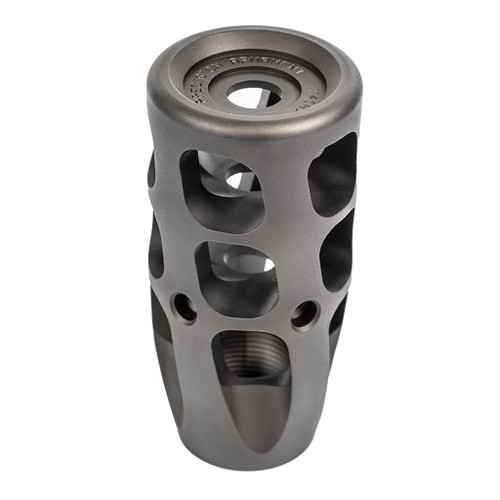
Hypertap® Gunsmith Muzzle Brake
$179.99 - $189.99 -