Using a Muzzle Brake with a Suppressor
Whether a muzzle brake or flash hider is the better suppressor mount seems to be a century-long debate amongst shooters. While both have legitimate advantages, a suppressor-mounted muzzle brake offers benefits that extend beyond recoil reduction. When paired with a compatible suppressor, a muzzle brake can improve suppressor durability, reduce blast baffle erosion, and extend service life—particularly on short-barreled rifles and high-pressure cartridges.
Understanding why requires a deep dive into what happens inside a suppressor during the first milliseconds after firing.
What Happens When You Fire a Suppressed Rifle?
When a cartridge is fired, rapidly expanding, high-temperature gases follow the bullet down the bore. As the bullet exits the muzzle, those gases immediately enter the suppressor. The first internal component they encounter is the blast chamber and blast baffle.
The blast baffle experiences the highest temperatures, greatest pressures, and fastest gas velocities of any component inside the suppressor. As a result, it typically sees the greatest amount of erosion over the suppressor's lifetime.
How a Muzzle Brake Changes Gas Flow
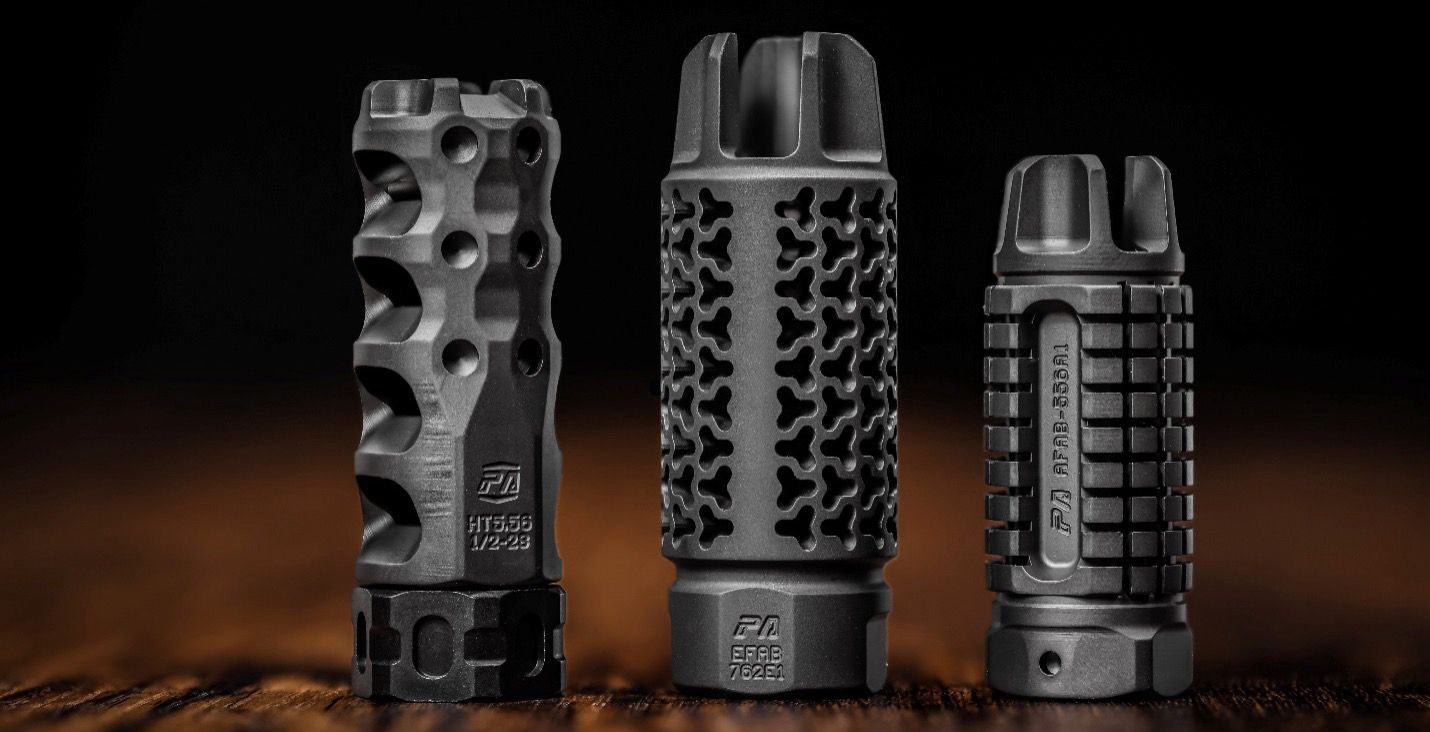
A muzzle brake essentially redirects a portion of the propellant gases through expansion ports before they enter the suppressor.
This produces several effects:
- The gas begins expanding before reaching the suppressor.
- Some gas momentum is redirected sideways instead of directly forward.
- Gas entering the blast chamber is generally less concentrated and less directional than it would be from a bare muzzle.
Inside the suppressor, this creates a more distributed flow field rather than a single, high-energy jet impacting the blast baffle. The result? Typically a lower localized thermal and erosive loading on the first baffle.
Muzzle Brakes Can Act as a Sacrificial Blast Baffle
One of the primary reasons muzzle brakes are recommend on hard-use rifles is that the brake itself absorbs part of the initial gas erosion. The brake's baffles and ports are directly exposed to extremely hot, high-velocity gases before those gases reach the suppressor, so over thousands of rounds, the brake may exhibit erosion that would otherwise occur on the suppressor's blast baffle.
Because a muzzle brake is relatively inexpensive and easily replaced, it effectively becomes a sacrificial component that helps protect the more costly suppressor. This advantage is especially valuable for short-barreled rifles (SBRs), high-pressure cartridges, rapid-fire use, high-volume training, and fully automatic firearms (where applicable).
Reduced Blast Baffle Erosion
Blast baffle erosion is caused primarily by a combination of high-temperature gas, high-pressure gas, high gas velocity, entrained powder particles, and repeated thermal cycling.
Modern suppressors use advanced materials such as Inconel, Stellite, Haynes alloys, titanium, or additive-manufactured superalloys to resist erosion, but no material is immune indefinitely. A muzzle brake helps by reducing the intensity of the initial gas jet before it impacts the blast baffle but the reduction is not absolute. Gas still enters the suppressor at very high pressure, but the flow is generally less focused than it would be from a plain muzzle.
Benefits on Short-Barreled Rifles
The shorter the barrel, the higher the pressure at the muzzle when the bullet exits. For example, a 10.5-inch 5.56 NATO rifle has significantly higher muzzle pressure than a 20-inch rifle firing the same ammunition.
Higher muzzle pressure means greater gas velocity, higher temperatures, increased erosive forces, and more demanding suppressor operating conditions
This is one reason muzzle brakes are often recommended for suppressed SBRs. By partially disrupting and expanding the gas before it enters the suppressor, the brake can reduce the severity of the initial gas impact on the blast baffle.
Does a Muzzle Brake Make the Suppressor Quieter?
Short answer? No. Once the suppressor is installed, overall sound performance is determined primarily by the suppressor's internal design, volume, flow characteristics, ammunition, and barrel length. Between comparable muzzle brake and flash hider mounts, differences in sound performance are typically small and often difficult to detect outside of controlled testing.
Shooters should select a mount based on durability, flash performance, recoil characteristics, and intended use rather than expecting significant sound differences.
Are There Any Downsides?
A muzzle brake is not always the ideal suppressor mount. Potential tradeoffs include:
- Additional Weight: Brakes are often slightly heavier than comparable flash hiders.
- More Carbon Fouling: The brake's ports and chambers can accumulate carbon, increasing maintenance requirements.
- Unsuppressed Blast: If the suppressor is removed, muzzle brakes produce substantially more blast, concussion, and side pressure than flash hiders, making them less comfortable for nearby shooters.
- No Meaningful Sound Advantage: Shooters should not expect measurable sound reduction simply from switching between a brake and a flash hider while using the same suppressor.

When a Flash Hider May Be the Better Choice
Flash hiders remain an excellent option for many applications. They are often preferred when:
- The rifle is frequently fired unsuppressed.
- Minimizing visible muzzle flash is a priority (hog hunting, etc).
- Reducing side concussion is important.
- Weight savings are desired.
- The rifle sees moderate firing schedules rather than sustained high-volume use.
Choosing the Right Mount
Neither muzzle brakes nor flash hiders are universally superior. For shooters who prioritize suppressor longevity—particularly those using short barrels, magnum cartridges, or high round counts—a suppressor-compatible muzzle brake offers a tangible mechanical advantage by acting as a sacrificial first stage for the expanding gases and reducing concentrated loading on the suppressor's blast baffle.
For shooters who spend significant time firing without a suppressor attached, a flash hider often provides a more practical balance of flash reduction and shooter comfort.
Ultimately, the best mounting solution depends on how the rifle is used. Understanding how each device influences gas flow, recoil, flash, and suppressor wear allows shooters to choose the configuration that best matches their application while maximizing both performance and service life.