In May 2025, the U.S. Department of Justice and Rare Breed Triggers reached a settlement that ended federal enforcement actions treating certain forced reset triggers (FRTs) as machine guns under federal law. What does that mean for US citizens? It means they are perfectly legal in many, but not all states. However, several states continue to prohibit or restrict FRT ownership under their own statutes. At the time of writing, these include California, New York, New Jersey, Connecticut, Illinois, Maryland, Massachusetts, Hawaii, Oregon, Washington, Delaware, Rhode Island, Minnesota, and Nevada.
*Always verify your state's current laws before purchasing or using an FRT.
How FRTs Affect Suppressors
Forced reset triggers have become widely popular since the federal ban was lifted but pairing them with a suppressor can cause significant damage and failures if not used correctly and with caution. FRTs allow heat to build extremely fast, producing a cyclic rate approaching that of some automatic firearms.
Suppressors absorb an enormous amount of thermal energy with every shot. During slow fire, they have time to cool between strings. During rapid fire, however, heat is added much faster than it can be dissipated. As suppressor temperature rises, several things occur simultaneously:
- Accelerated blast baffle erosion
- Increased wear from high-temperature, high-velocity gas flow
- Greater thermal stresses throughout the suppressor
- Reduced material strength at elevated temperatures
- Faster degradation of surface finishes and coatings
These effects become even more severe on short-barreled rifles, particularly 10.3-12.5 inch 5.56 NATO platforms, where muzzle pressure and gas temperature are significantly higher than on longer barrels.
Heat, Erosion, and Fatigue
The blast baffle experiences the highest pressure, temperature, and particle impact inside the suppressor, making it the component most susceptible to wear.
High rates of fire dramatically increase the cumulative exposure to these conditions, accelerating erosion and raising overall suppressor temperature. Elevated temperatures also reduce the strength and fatigue resistance of many materials, increasing the likelihood of damage if firing schedules exceed the manufacturer's recommendations.
Although erosion and fatigue cracks generally develop over many firing cycles rather than a single range session, repeated exposure to extreme thermal cycles can shorten the long-term service life of the suppressor.
Mounting Systems
Rapid firing with an FRT also increases thermal expansion, vibration, and cyclic loading on the mounting system. If a suppressor is not properly installed or the mounting interface is not designed for sustained hard use, these conditions can increase the likelihood of mount loosening or accelerated wear of threads, tapers, and QD mechanisms. Periodically checking mount tightness during extended firing sessions is always recommended.
Choosing the Right Suppressor
Not all suppressors are designed for sustained rapid fire.
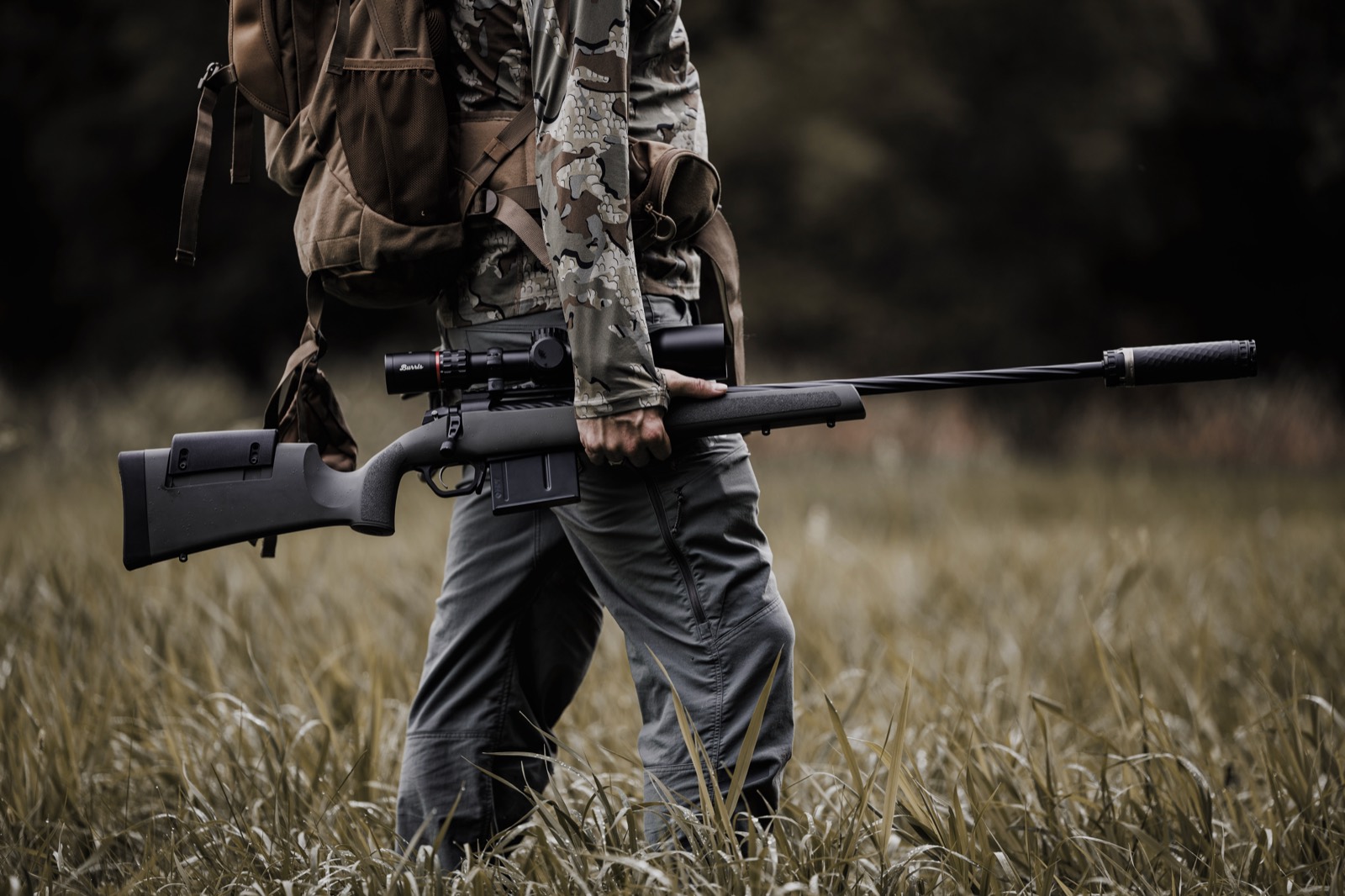
Suppressors built from high-temperature nickel alloys such as Inconel or Haynes generally maintain their strength at elevated temperatures much better than lightweight titanium suppressors, making them better suited for prolonged high-volume firing. Titanium suppressors offer significant weight savings but are typically intended for applications where low weight is prioritized over continuous extreme firing schedules.
Suppressors featuring replaceable blast baffles or replaceable core assemblies can also offer a significant advantage. Because the highest-wear components are serviceable, erosion damage can often be repaired without replacing the entire suppressor, substantially extending its usable service life.
Is It Safe?
Using an FRT with a suppressor is not inherently unsafe, provided the suppressor is designed for the intended application.
Always ensure the suppressor:
- Is rated for the cartridge being fired.
- Is approved for your barrel length.
- Is rated for the intended firing schedule or full-auto use, if applicable.
- Is securely mounted and periodically checked during extended firing.
- Is allowed to cool when recommended by the manufacturer.
The bottom line is fairly simple: FRTs dramatically increase the thermal and mechanical demands placed on a suppressor. A hard-use suppressor built from high-temperature alloys and engineered for sustained rapid fire will generally tolerate FRT use far better than a lightweight suppressor designed primarily for hunting or recreational shooting.
Questions to Ask Before Using an FRT
- What material is the suppressor made from?
- Is the suppressor rated for full-auto or sustained rapid fire?
- What barrel lengths is it rated for?
- Does the manufacturer specify a maximum firing schedule?
- Are high-wear components replaceable or serviceable?